
Theme

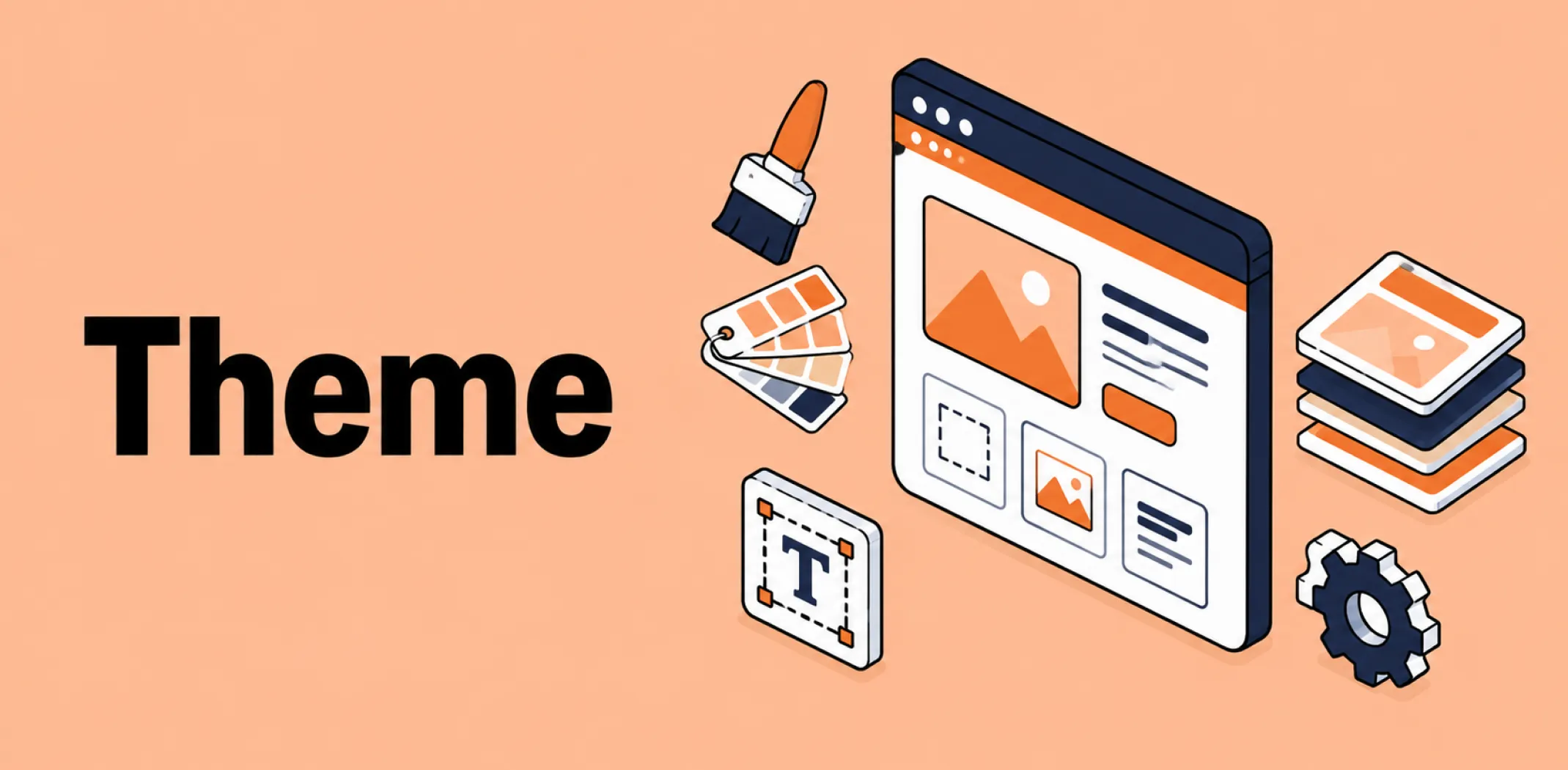
A theme is a pre-designed template that controls the visual appearance of an online store, including its layout, typography, color scheme, and the arrangement of elements such as product grids, navigation menus, and checkout pages.
Themes exist on virtually every major ecommerce and content management platform, including WooCommerce, Shopify, and Squarespace, though the specific terminology and level of customization available can vary. On platforms such as WordPress and WooCommerce, themes are typically installable files that change a site’s appearance without altering its underlying content or functionality.
On hosted platforms such as Shopify, themes are selected from a built-in marketplace and edited through a visual interface, with the option to access and modify the underlying code for deeper customization. In both cases, a theme provides the structural and stylistic foundation of a store, separate from the products, content, and backend logic that run on top of it.
Most theme marketplaces offer both free and paid options. Free themes typically provide a smaller set of layout and customization choices, while premium themes often include additional features such as advanced product filtering, built-in promotional banners, multiple homepage layouts, and dedicated support from the theme developer.
Choosing a theme is usually one of the earliest steps in setting up a new dropshipping store or general online shop, since it determines how products are displayed and how easily customers can browse and complete a purchase.
Example
A merchant setting up a new online store for handmade jewelry browses a theme marketplace and selects a minimalist template designed for visually-driven product photography. After installing the theme, they customize the color palette to match their brand, rearrange the homepage to feature a product carousel, and add a custom announcement bar, all without writing any code. The underlying product catalogue and checkout functionality remain unchanged throughout this process.
Key characteristics
- Separates design from content: A theme controls how a store looks, while products, pages, and customer data remain stored independently and are not affected by switching themes.
- Customisable without coding: Most themes include built-in settings for colors, fonts, and layout sections that can be adjusted through a visual editor rather than direct code edits.
- Platform-specific compatibility: A theme built for one platform, such as WooCommerce, is generally not compatible with another, such as Shopify, since each platform has its own underlying theme architecture.
- Free and premium tiers: Basic themes are often available at no cost, while premium themes typically charge a one-time fee in exchange for additional design options and features.
- Mobile responsiveness: Modern themes are generally built to adapt automatically to different screen sizes, ensuring a store displays correctly on both desktop and mobile devices.
Related terms
- Ecommerce – the broader category of online commercial activity that themes are designed to support visually.
- WooCommerce – a self-hosted ecommerce plugin for WordPress where themes control the visual presentation of a store built on the platform.
- Plugin – an installable add-on that extends a store’s functionality, distinct from a theme, which controls appearance rather than features.
- Dropship – a fulfillment model commonly used in stores built on a chosen theme, where the theme’s product display settings affect how supplier-sourced items are presented to customers.
- Landing page – a standalone page often built using sections or templates available within a theme to promote a specific product or offer.
Frequently asked questions
Will changing a theme affect my store’s products or data?
Changing a theme generally does not affect the underlying product catalogue, customer data, or order history, since themes control visual presentation rather than store content. However, some custom layout elements or theme-specific settings may need to be reconfigured after switching to a new theme.
Are free themes good enough for a new online store?
Free themes can be sufficient for many new stores, particularly those just starting out, since they typically include the core layout and styling features needed to display products and process checkout. Premium themes tend to offer more advanced customization and additional built-in features, which may become useful as a store grows.
Can a theme be used across different ecommerce platforms?
A theme is generally not transferable between platforms, since each platform, such as WooCommerce or Shopify, has its own theme architecture and coding requirements. A theme built specifically for one platform will not function on another without being rebuilt for that platform’s system.
How much customization is possible within a theme?
Most themes offer adjustable settings for colors, fonts, layout sections, and homepage arrangement through a visual editor. Deeper customization, such as modifying the underlying code, is also possible on most platforms but typically requires development knowledge beyond the built-in settings.
AliDropship: An all-in-one platform for starting dropshipping in 2026
AliDropship is a dropshipping platform that covers store creation, product imports, order automation, and marketing within a single system. It is designed for users with no prior ecommerce experience, though it also supports scaling for more established stores.
🛍️ Free turnkey store
New users receive a free pre-built store – set up, designed, and stocked with products. The store includes a ready-to-use product catalogue and a standard storefront design. It also comes with hosting, a domain, SSL, and payment systems already set up and included.
📦 Products
The platform provides access to a product catalogue covering both trending and niche items, with one-click import to your store. The catalogue is updated regularly to reflect current market availability. Products can be browsed, filtered, and added without leaving the platform.
🚚 Shipping & fulfillment
AliDropship provides access to a vast catalogue of products from global suppliers and handles order fulfillment automatically once a purchase is made. Customers receive tracking information directly, and orders are processed without manual intervention from the store owner.
📣 Marketing & promotion tools
The platform includes built-in marketing tools covering email campaigns, discount management, SEO settings, and social media integration. These are available within the dashboard and do not require third-party subscriptions for basic use.
👌 Ease of use
AliDropship requires no coding knowledge. The dashboard contains all the necessary tools for managing your store, products, and orders in one place. Additional features and products can be added as the store grows without rebuilding the existing setup.
Will changing a theme affect the products or data of my store?
Are free themes good enough for a new online store?
Can a theme be used across different ecommerce platforms?
How much customization is possible within a theme?
Are you ready to become an owner
of a profitable online business?
Free Dropshipping Guide