
Warehouse

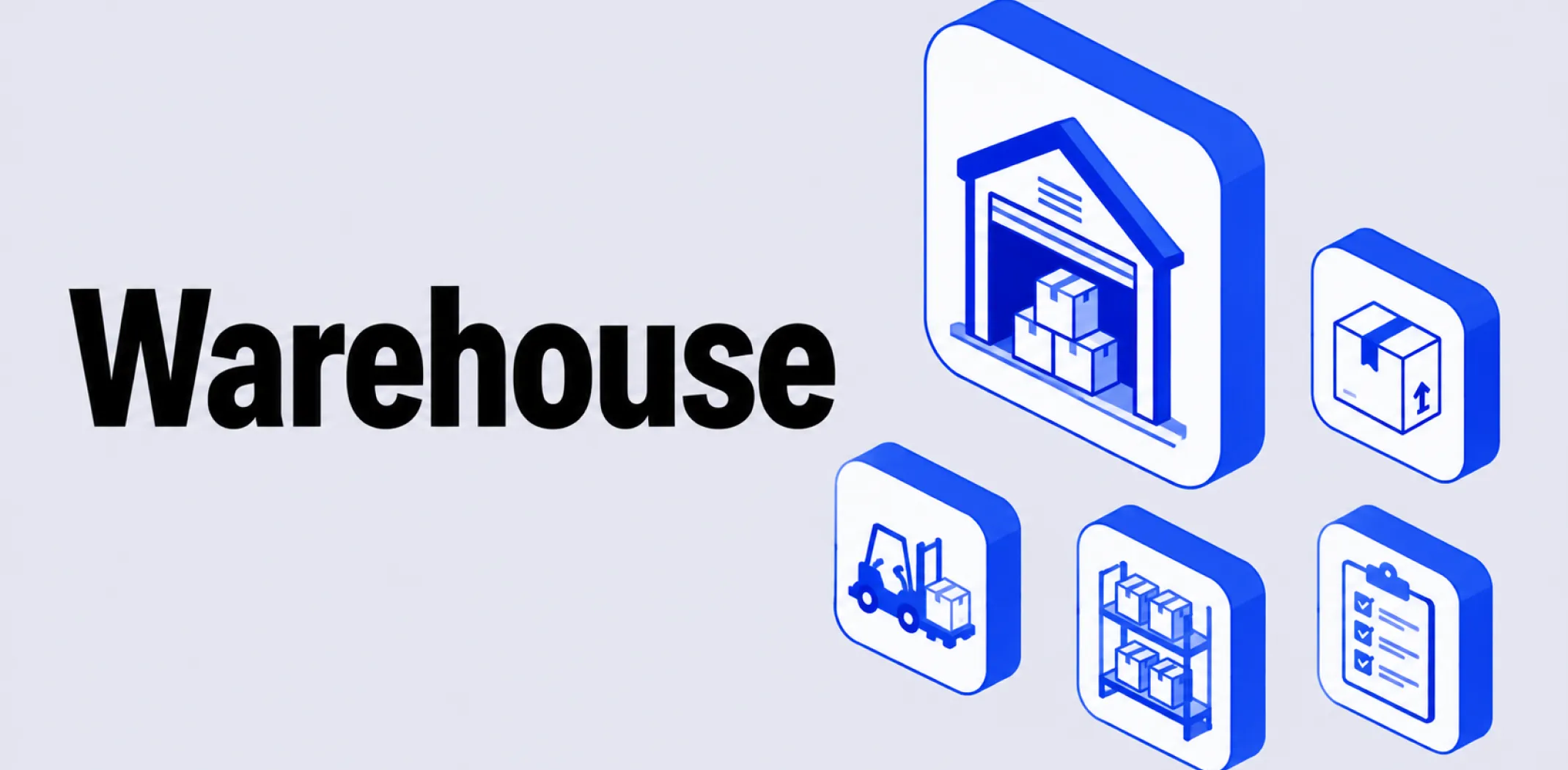
A warehouse is a facility used to store goods in an organized manner before they are sold, distributed, or shipped onward, serving as a central point in the supply chain where inventory sits, tracked and managed, until it is needed.
Warehouses are used across nearly every industry, from manufacturers and wholesalers to retailers and ecommerce businesses, and come in several distinct forms depending on ownership and purpose. A private warehouse is owned or leased directly by the business storing its own goods, offering full control over operations at the cost of the capital investment required.
A public warehouse is owned by a third party and rented out to multiple businesses, offering flexibility and lower upfront cost in exchange for less customization.
A bonded warehouse is licensed by customs authorities to store imported goods before duties and taxes are paid, letting importers defer that payment until the goods are released for sale, which can meaningfully improve cash flow for businesses handling significant import volume.
A fulfillment center is a more specialized type of warehouse, built specifically around fast, accurate processing of individual ecommerce orders rather than long-term bulk storage.
Modern warehouses are typically run with the help of a warehouse management system (WMS), software that tracks inventory as it moves through receiving, storage, picking, packing, and shipping.
A WMS commonly uses barcode or RFID scanning to give real-time visibility into stock levels and locations, helping a business avoid running out of popular items, identify the most efficient storage layout, and reduce errors compared to manual tracking methods.
Some WMS platforms operate as standalone software dedicated purely to warehouse operations, while others are built as a module within a broader enterprise resource planning system that connects warehouse activity to a business’s finance, purchasing, and order systems.
Example
A growing furniture retailer needs space to store imported pieces before they reach customers. To manage cash flow while customs duties are pending, the retailer initially stores incoming containers in a bonded warehouse. Once duties are paid and goods are released, the inventory is transferred to the retailer’s own private warehouse, where a warehouse management system tracks each item’s exact shelf location, automatically flagging low stock on popular models so the retailer can reorder before running out.
Key characteristics
- Multiple ownership models: Private, public, and bonded warehouses differ primarily in who owns the facility and what regulatory or cost trade-offs come with using it.
- Core functions remain consistent: Receiving, storing, tracking, and dispatching goods form the basic operations of nearly every warehouse, regardless of ownership type or industry.
- Technology-driven inventory tracking: Most modern warehouses rely on a warehouse management system using barcode or RFID scanning for real-time visibility into stock levels and locations.
- Distinct from a fulfillment center: A fulfillment center is a specialized type of warehouse optimized for shipping individual consumer orders quickly, rather than the broader bulk storage and distribution functions a general warehouse may serve.
- Scales with automation: Many larger warehouses now incorporate robotics, automated guided vehicles, and AI-driven systems to improve efficiency and reduce reliance on manual labor for repetitive tasks.
Related terms
- Fulfillment center – a specialized type of warehouse built specifically for fast, accurate processing of individual ecommerce orders.
- Order fulfillment – the broader process of receiving, processing, and shipping a customer order, of which warehouse operations form a core part.
- Dropship – a fulfillment model that avoids the need for a business to operate or rent its own warehouse space at all.
- Wholesale – a bulk purchasing model in which goods are commonly stored in a warehouse before being resold to retailers or end customers.
- Supplier – the party that typically provides the goods stored within a warehouse before they are sold or distributed onward.
Frequently asked questions
What is the difference between a private and a public warehouse?
A private warehouse is owned or leased directly by the business storing its goods, offering full control but requiring significant upfront investment. A public warehouse is owned by a third party and rented to multiple businesses, offering more flexibility and lower upfront cost in exchange for less customization over operations.
What is a bonded warehouse used for?
A bonded warehouse is a facility licensed by customs authorities to store imported goods before import duties and taxes are paid. This allows importers to defer those payments until goods are actually released for sale, which can improve cash flow for businesses handling significant volumes of imported inventory.
Is a fulfillment center the same as a warehouse?
A fulfillment center is a specific, specialized type of warehouse. While all fulfillment centers are warehouses, not all warehouses are fulfillment centers, since many warehouses focus on long-term bulk storage rather than the fast, individual order processing a fulfillment center is built around.
Do small businesses need their own warehouse?
Not necessarily. Many small or early-stage businesses use public warehousing, a third-party fulfillment center, or a dropshipping model to avoid the upfront cost of leasing and operating their own dedicated facility, scaling up to private warehouse space only once order volume justifies the investment.
AliDropship: An all-in-one platform for starting dropshipping in 2026
AliDropship is a dropshipping platform that covers store creation, product imports, order automation, and marketing within a single system. It is designed for users with no prior ecommerce experience, though it also supports scaling for more established stores.
🛍️ Free turnkey store
New users receive a free pre-built store – set up, designed, and stocked with products. The store includes a ready-to-use product catalogue and a standard storefront design. It also comes with hosting, a domain, SSL, and payment systems already set up and included.
📦 Products
The platform provides access to a product catalogue covering both trending and niche items, with one-click import to your store. The catalogue is updated regularly to reflect current market availability. Products can be browsed, filtered, and added without leaving the platform.
🚚 Shipping & fulfillment
AliDropship provides access to a vast catalogue of products from global suppliers and handles order fulfillment automatically once a purchase is made. Customers receive tracking information directly, and orders are processed without manual intervention from the store owner.
📣 Marketing & promotion tools
The platform includes built-in marketing tools covering email campaigns, discount management, SEO settings, and social media integration. These are available within the dashboard and do not require third-party subscriptions for basic use.
👌 Ease of use
AliDropship requires no coding knowledge. The dashboard contains all the necessary tools for managing your store, products, and orders in one place. Additional features and products can be added as the store grows without rebuilding the existing setup.
What is the difference between a private and a public warehouse?
What is a bonded warehouse used for?
Is a fulfillment center the same as a warehouse?
Do small businesses need their own warehouse?
Are you ready to become an owner
of a profitable online business?
Free Dropshipping Guide