
3PL

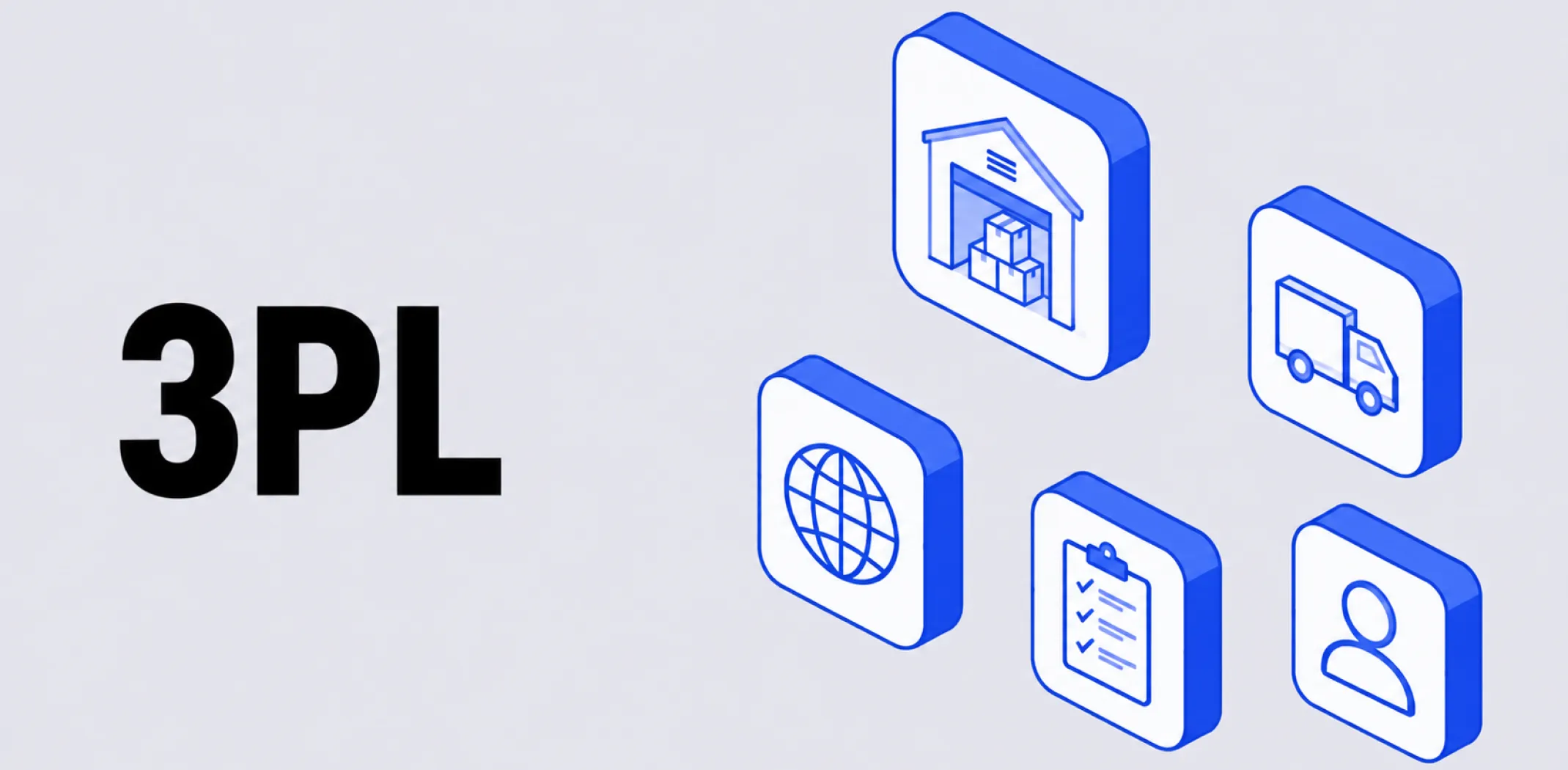
A 3PL, or third-party logistics provider, is a company that handles the physical work of storing, picking, packing, and shipping a business’s products on its behalf, operating one or more fulfillment centers that hold client inventory and process orders as they come in.
It is worth distinguishing the company from the building: a 3PL is the service provider, while a fulfillment center is the physical facility it operates. A business that outsources its logistics sends inventory to the 3PL’s fulfillment center, and the 3PL handles receiving, storage, and order processing without the business needing to touch the product directly.
Roughly 90 percent of Fortune 500 companies partner with at least one 3PL, and the model is widely used across ecommerce businesses of nearly every size, since it removes the need to lease warehouse space, hire staff, or invest in fulfillment software directly.
How it works
Bringing a new business onto a 3PL follows a fairly consistent sequence, typically completed within two to six weeks depending on complexity.
Discovery and data setup: the business provides product information, including SKUs, barcodes, and dimensions, while both sides agree on service expectations such as order accuracy and shipping speed targets.
System integration: the business’s ecommerce platform, such as Shopify or WooCommerce, is connected to the 3PL’s warehouse management system, letting orders flow automatically into the fulfillment center without manual entry.
Inventory transfer and testing: initial stock is shipped to the 3PL’s facility and shelved, while test orders run through the full pick-pack-ship cycle to confirm everything works before real customer orders are involved.
Go-live and ongoing fulfillment: once testing passes, the account switches to production, and incoming orders are automatically picked, packed, and shipped, with performance closely monitored during the first few weeks.
Example
A skincare brand selling through its own Shopify store has been hand-packing every order from the founder’s apartment, but order volume has grown beyond what the small team can manage. The brand partners with a 3PL, sending its remaining inventory to the provider’s fulfillment center and connecting its Shopify store directly to the 3PL’s warehouse system. After a short testing period using sample orders, the account goes live: new orders placed on the website now flow automatically to the fulfillment center, where they are picked, packed, and shipped without anyone on the brand’s team handling the product.
Key characteristics
- Outsourced physical operations: A 3PL takes over the storage, handling, and shipping work a business would otherwise need to perform in-house, in exchange for storage and per-order fees.
- Requires holding inventory: Using a 3PL means a business purchases and ships its own stock to the provider in advance, distinguishing it from dropshipping, where no inventory is held at all.
- Carrier rate advantages: Because 3PLs consolidate shipping volume across many client businesses, they can typically negotiate lower carrier rates than an individual business could secure alone.
- Tiered, itemized pricing: Costs are generally broken into separate fees for receiving, storage, pick-and-pack, and shipping, with rates that improve as order volume increases.
- Volume thresholds apply: Most 3PLs require a minimum monthly order volume, commonly in the range of a few hundred orders, to remain cost-effective for both the provider and the client.
Related terms
- Fulfillment center – the physical warehouse facility that a 3PL operates to store inventory and process customer orders.
- Warehouse – the broader category of storage facility, of which a 3PL-operated fulfillment center is one specialized type.
- Order fulfillment – the overall process of receiving, processing, and shipping orders that a 3PL handles on a business’s behalf.
- Dropship – an alternative model in which no inventory is held by the seller at all, unlike the inventory-holding arrangement required when using a 3PL.
- CMS – the platform underlying a store’s website, which is typically connected directly to a 3PL’s systems during integration to automate order flow.
Frequently asked questions
What is the difference between a 3PL and a fulfillment center?
A 3PL is the company providing the logistics service, while a fulfillment center is the physical warehouse facility it operates. A business partnering with a 3PL is effectively a client whose inventory is stored and processed inside that provider’s fulfillment center.
How long does it take to onboard with a new 3PL?
Most 3PL onboarding takes between two and six weeks, depending on the complexity of system integrations, the number of SKUs involved, and how much inventory needs to be transferred and tested before going live with real customer orders.
Is using a 3PL the same as dropshipping?
No, these are different fulfillment models. With a 3PL, a business purchases and ships its own inventory to the provider’s facility in advance, paying storage and handling fees. With dropshipping, the seller never holds inventory, and a supplier ships each order directly to the customer only after a sale is made.
How much do 3PL services typically cost?
Costs are generally broken into separate fees for receiving, storage, picking and packing, and shipping, with storage often charged per pallet or per cubic foot and fulfillment charged per order. Setup fees during onboarding and rates that improve with higher order volume are also common across most providers.
AliDropship: An all-in-one platform for starting dropshipping in 2026
AliDropship is a dropshipping platform that covers store creation, product imports, order automation, and marketing within a single system. It is designed for users with no prior ecommerce experience, though it also supports scaling for more established stores.
🛍️ Free turnkey store
New users receive a free pre-built store – set up, designed, and stocked with products. The store includes a ready-to-use product catalogue and a standard storefront design. It also comes with hosting, a domain, SSL, and payment systems already set up and included.
📦 Products
The platform provides access to a product catalogue covering both trending and niche items, with one-click import to your store. The catalogue is updated regularly to reflect current market availability. Products can be browsed, filtered, and added without leaving the platform.
🚚 Shipping & fulfillment
AliDropship provides access to a vast catalogue of products from global suppliers and handles order fulfillment automatically once a purchase is made. Customers receive tracking information directly, and orders are processed without manual intervention from the store owner.
📣 Marketing & promotion tools
The platform includes built-in marketing tools covering email campaigns, discount management, SEO settings, and social media integration. These are available within the dashboard and do not require third-party subscriptions for basic use.
👌 Ease of use
AliDropship requires no coding knowledge. The dashboard contains all the necessary tools for managing your store, products, and orders in one place. Additional features and products can be added as the store grows without rebuilding the existing setup.
What is the difference between a 3PL and a fulfillment center?
How long does it take to onboard with a new 3PL?
Is using a 3PL the same as dropshipping?
How much do 3PL services typically cost?
Are you ready to become an owner
of a profitable online business?
Free Dropshipping Guide