
Subdomain

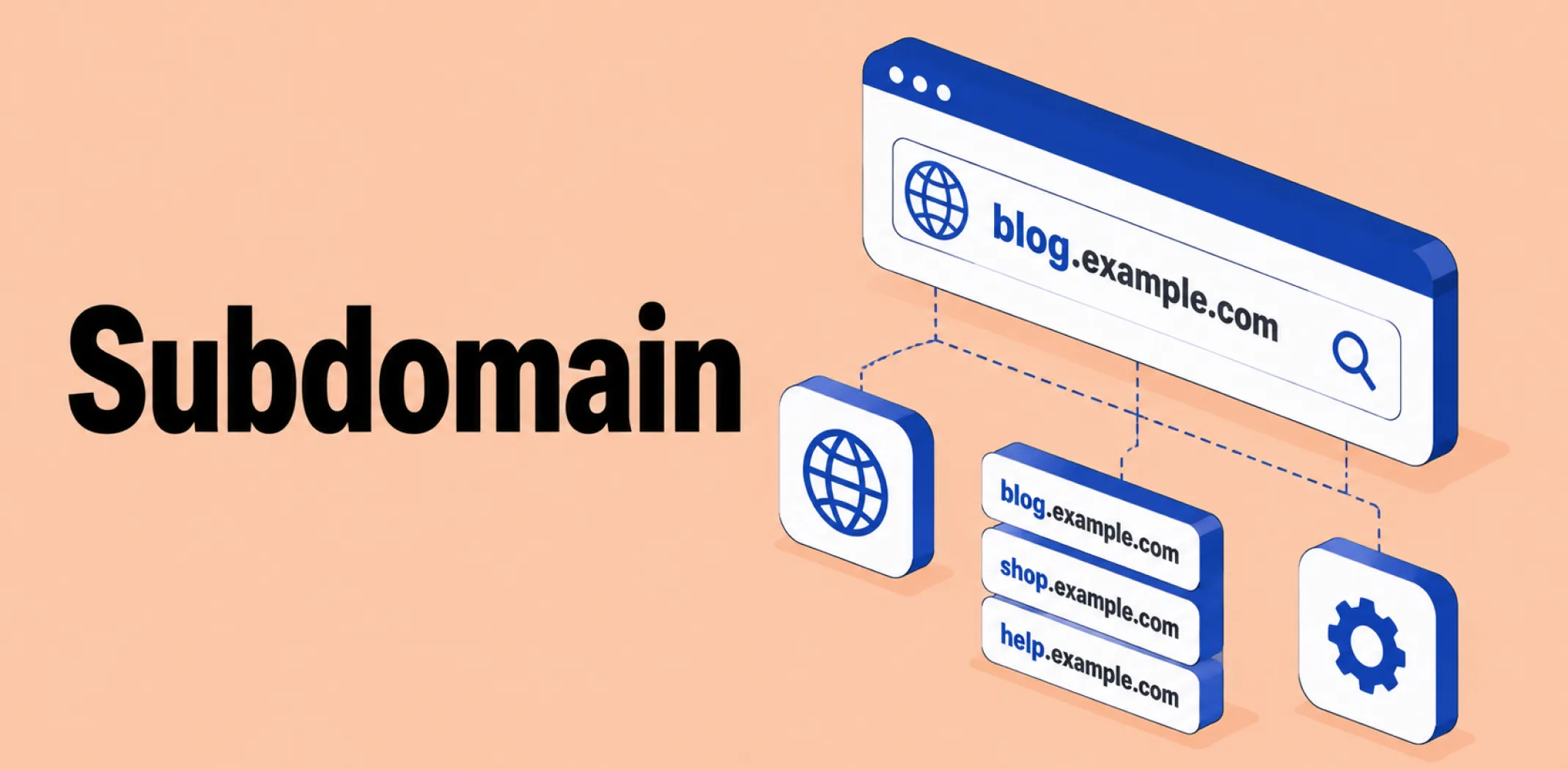
A subdomain is a prefix added in front of a registered domain name, such as the “shop” in shop.example.com, used to create a distinct web address for a specific section of a site without registering an entirely separate domain.
Technically, a subdomain works by adding another label to the Domain Name System lookup that points a browser to the correct server; rather than registering a new domain through a registrar, the existing domain’s owner configures DNS records to route traffic for the subdomain to whichever server or platform they choose.
This means a subdomain can run on entirely different technology than the main site. A common ecommerce example is using shop.example.com to run a store on Shopify or WooCommerce while the main example.com domain continues to run on a separate content management system for blog content or marketing pages.
Subdomains are frequently compared to subdirectories (also called subfolders), which organize content into folders within the same domain instead, such as example.com/shop rather than shop.example.com. The two options carry different practical trade-offs.
A subdirectory shares the parent domain’s accumulated search authority and analytics by default, and requires no additional hosting, SSL certificate, or technical configuration, since it lives within the same site.
A subdomain is treated by search engines more like a related but separate site, meaning it generally needs its own SEO effort to build authority, but in exchange it offers genuine architectural separation: different infrastructure, different access permissions, and independent scaling for the section it hosts.
Example
A company runs its main marketing website at example.com using a content-focused CMS, but decides to launch its online store using a dedicated ecommerce platform with different infrastructure requirements. Rather than rebuilding the marketing site to accommodate the store, the company sets up shop.example.com as a subdomain, pointing it to the new platform. Customers can move between the marketing site and the store as if browsing one cohesive brand, while behind the scenes the two run on entirely separate systems.
Key characteristics
- No separate registration required: A subdomain is created by configuring DNS settings on an existing domain rather than registering an entirely new one through a registrar.
- Can run different technology: A subdomain can be hosted on different infrastructure or a different platform entirely than the main domain, making it useful when one section of a site has distinct technical needs.
- Treated as a related but separate site by search engines: Subdomains often need their own SEO effort, since search authority does not automatically carry over from the main domain in the way it does for a subdirectory.
- Common ecommerce uses: Typical patterns include shop. for a store, support. or help. for a help center and country or language codes such as uk. or fr. for region-specific content.
- Requires its own technical setup: A subdomain on different infrastructure may need its own hosting, SSL certificate, and analytics configuration, adding ongoing maintenance compared to a subdirectory.
Related terms
- Domain name – the root web address that a subdomain is added in front of, such as the “example.com” in shop.example.com.
- Extension – the suffix portion of a domain name, distinct from a subdomain, which is added as a prefix rather than at the end.
- Hosting – the server-based service that a subdomain on different infrastructure may require separately from the main domain’s hosting plan.
- SSL certificate – a security certificate that a subdomain running on separate infrastructure typically needs to install in addition to the main domain’s certificate.
- Ecommerce – a common use case for subdomains, where a store such as shop.example.com is separated from a brand’s main website.
Frequently asked questions
What is the difference between a subdomain and a subdirectory?
A subdomain creates a distinct web address, such as shop.example.com, that can run on entirely different infrastructure than the main site. A subdirectory, such as example.com/shop, organizes content into a folder within the same site, sharing the same hosting, SSL certificate, and search authority as the main domain by default.
Do subdomains hurt SEO?
Search engines generally do not penalize subdomains, but they often treat them as related yet separate sites, meaning a subdomain typically needs its own dedicated SEO effort to build authority rather than automatically inheriting it from the main domain, as a subdirectory would.
Do I need to register a subdomain separately from my main domain?
No, a subdomain does not require separate registration through a domain registrar. It is created by configuring DNS settings on an existing, already-registered domain to route traffic for that subdomain to the desired server or platform.
Why would an ecommerce store use a subdomain instead of the main domain?
A store might use a subdomain such as shop.example.com when it runs on a different platform or technology than the rest of the site, allowing the store to be built, scaled, and secured independently of the main website without requiring a complete rebuild of the existing site.
AliDropship: An all-in-one platform for starting dropshipping in 2026
AliDropship is a dropshipping platform that covers store creation, product imports, order automation, and marketing within a single system. It is designed for users with no prior ecommerce experience, though it also supports scaling for more established stores.
🛍️ Free turnkey store
New users receive a free pre-built store – set up, designed, and stocked with products. The store includes a ready-to-use product catalogue and a standard storefront design. It also comes with hosting, a domain, SSL, and payment systems already set up and included.
📦 Products
The platform provides access to a product catalogue covering both trending and niche items, with one-click import to your store. The catalogue is updated regularly to reflect current market availability. Products can be browsed, filtered, and added without leaving the platform.
🚚 Shipping & fulfillment
AliDropship provides access to a vast catalogue of products from global suppliers and handles order fulfillment automatically once a purchase is made. Customers receive tracking information directly, and orders are processed without manual intervention from the store owner.
📣 Marketing & promotion tools
The platform includes built-in marketing tools covering email campaigns, discount management, SEO settings, and social media integration. These are available within the dashboard and do not require third-party subscriptions for basic use.
👌 Ease of use
AliDropship requires no coding knowledge. The dashboard contains all the necessary tools for managing your store, products, and orders in one place. Additional features and products can be added as the store grows without rebuilding the existing setup.
What is the difference between a subdomain and a subdirectory?
Do subdomains hurt SEO?
Do I need to register a subdomain separately from my main domain?
Why would an ecommerce store use a subdomain instead of the main domain?
Are you ready to become an owner
of a profitable online business?
Free Dropshipping Guide