
Extension

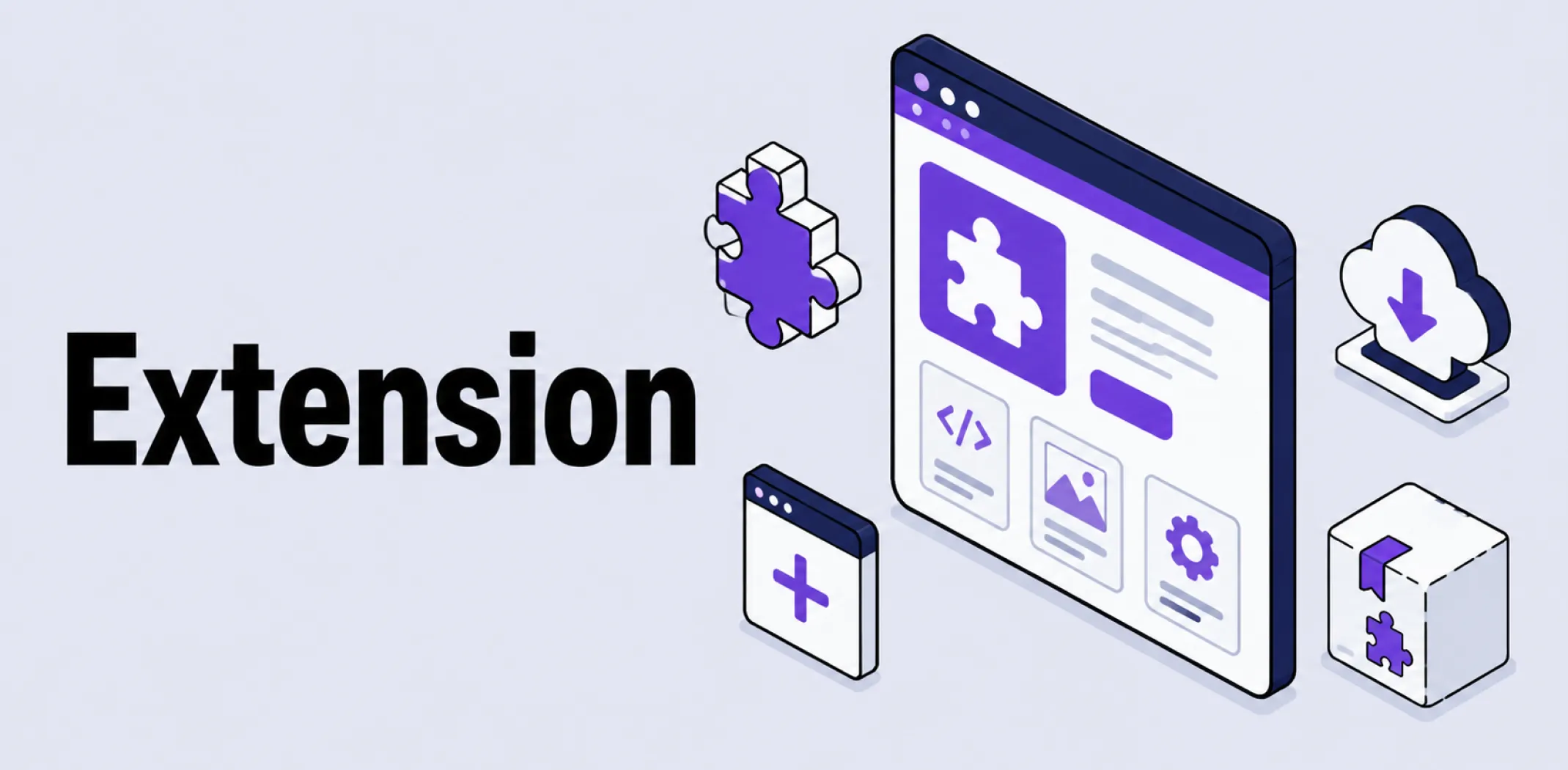
Extension is a term used in two distinct but related contexts in online selling: a domain extension, the suffix at the end of a website address such as .com or .shop, and a software extension, an installable add-on that extends the functionality of a browser, app, or platform.
A domain extension, also called a top-level domain (TLD), is the part of a domain name that comes after the final dot, such as the “.com” in www.trust-earning-profit.com.
Domain extensions are managed under the Domain Name System and fall into several categories: generic top-level domains such as .com, .org, and .net, which are open to general registration; country-code top-level domains such as .uk or .ca, which are tied to a specific country or region; and restricted or sponsored extensions such as .edu or .gov, reserved for specific types of organizations.
In recent years, hundreds of newer, niche-specific extensions have also become available, including ecommerce-oriented options such as .shop, .store, and .online, which can signal a site’s commercial purpose more directly than a traditional .com address.
A software extension, sometimes used interchangeably with terms like plugin or app depending on the platform, is most commonly associated with web browsers such as Chrome, Firefox, and Edge, where it adds or modifies browsing functionality, such as blocking ads, managing passwords, or applying coupon codes automatically at checkout.
While the underlying concept overlaps closely with a plugin, the terminology differs by context: “extension” is generally used for browser-level add-ons, while “plugin” more commonly refers to add-ons installed directly on a website’s backend, such as a WordPress plugin.
Example
A new merchant launching a dropshipping store is deciding between a .com domain and a .shop extension for their brand. They choose .shop to signal clearly that the site is a retail store, since their preferred .com name was already taken. Separately, while researching products, the merchant installs a price-tracking browser extension that automatically alerts them when a supplier’s wholesale price changes, helping them adjust their own store pricing accordingly.
Key characteristics
- Two distinct meanings: “Extension” can refer to a domain suffix (a TLD such as .com or .shop) or to a software add-on (most commonly a browser extension), depending on context.
- Domain extensions affect branding and trust: Traditional extensions like .com tend to carry more established consumer trust, while newer, niche-specific extensions can more directly communicate a site’s purpose or industry.
- Some domain extensions are restricted: Extensions such as .edu and .gov require specific eligibility and cannot be freely registered by any business or individual.
- Browser extensions operate at the browser level: Unlike a website plugin, a browser extension runs within the user’s browser itself and can affect any site visited, not just one specific store.
- Both types can be paid or free: Domain extensions are registered for a recurring annual fee that varies by TLD, while software extensions are commonly offered for free, with some premium versions available for advanced features.
Related terms
- Domain name – the full web address of a site, of which the domain extension forms the final part.
- Plugin – a closely related concept to a software extension, typically referring to add-ons installed on a website’s backend rather than within a browser.
- Web hosting – the server space a domain name and its extension are connected to in order to make a website accessible online.
- Ecommerce – the broader category of online commercial activity that both domain extensions and software extensions can support, whether through branding or added store functionality.
- Theme – a pre-designed template controlling a store’s visual appearance, distinct from both types of extension, which affect addressing or functionality rather than design.
Frequently asked questions
What is the difference between a domain extension and a software extension?
A domain extension is the suffix at the end of a website address, such as .com or .shop, that forms part of a site’s web address. A software extension is an installable add-on, most commonly associated with web browsers, that adds or modifies functionality such as blocking ads or applying discount codes automatically.
Does the domain extension I choose affect my store’s credibility?
Domain extension choice can influence how visitors perceive a website, since long-established extensions such as .com tend to carry more familiarity and trust. Newer, niche-specific extensions such as .shop or .store can still build trust over time and may help signal a site’s commercial purpose more clearly to visitors.
Are browser extensions the same thing as plugins?
Browser extensions and plugins serve a similar purpose, adding functionality to an existing system, but the terms are typically used in different contexts. “Extension” usually refers to add-ons that run within a web browser, while “plugin” more commonly refers to add-ons installed directly on a website’s backend, such as on WordPress.
Can I change my domain extension after launching a store?
It is technically possible to switch to a different domain extension after launch, but doing so typically requires registering a new domain, redirecting traffic from the old address, and updating any external links or marketing materials, which can temporarily affect search visibility and customer recognition.
AliDropship: An all-in-one platform for starting dropshipping in 2026
AliDropship is a dropshipping platform that covers store creation, product imports, order automation, and marketing within a single system. It is designed for users with no prior ecommerce experience, though it also supports scaling for more established stores.
🛍️ Free turnkey store
New users receive a free pre-built store – set up, designed, and stocked with products. The store includes a ready-to-use product catalogue and a standard storefront design. It also comes with hosting, a domain, SSL, and payment systems already set up and included.
📦 Products
The platform provides access to a product catalogue covering both trending and niche items, with one-click import to your store. The catalogue is updated regularly to reflect current market availability. Products can be browsed, filtered, and added without leaving the platform.
🚚 Shipping & fulfillment
AliDropship provides access to a vast catalogue of products from global suppliers and handles order fulfillment automatically once a purchase is made. Customers receive tracking information directly, and orders are processed without manual intervention from the store owner.
📣 Marketing & promotion tools
The platform includes built-in marketing tools covering email campaigns, discount management, SEO settings, and social media integration. These are available within the dashboard and do not require third-party subscriptions for basic use.
👌 Ease of use
AliDropship requires no coding knowledge. The dashboard contains all the necessary tools for managing your store, products, and orders in one place. Additional features and products can be added as the store grows without rebuilding the existing setup.
What is the difference between a domain extension and a software extension?
Does the domain extension I choose affect the credibility of my store?
Are browser extensions the same thing as plugins?
Can I change my domain extension after launching a store?
Are you ready to become an owner
of a profitable online business?
Free Dropshipping Guide