
Template

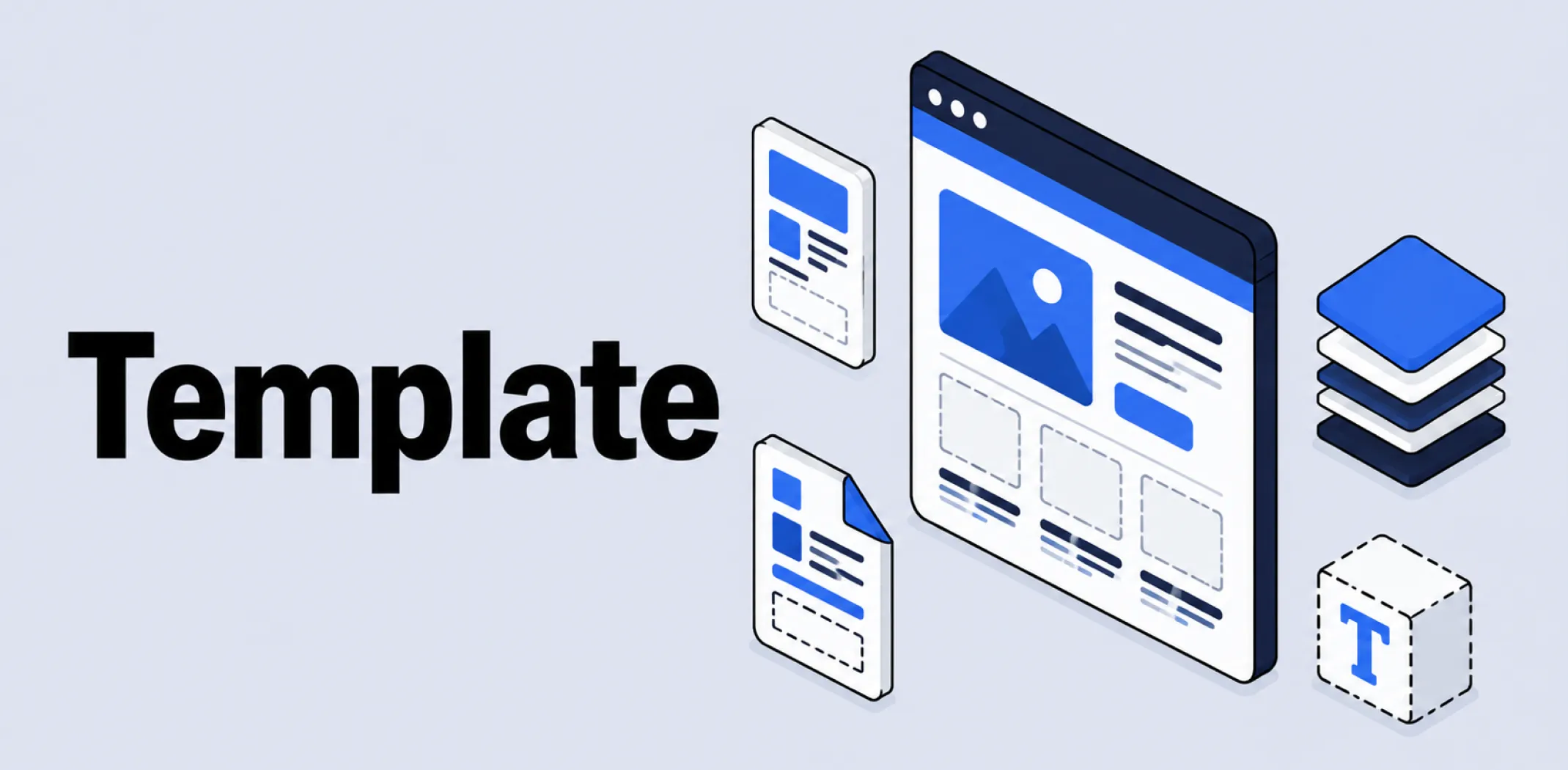
A template is a pre-built layout that provides the structural foundation for a piece of digital content – a website, a single page, an email, or an online store – before any specific text, images, or products are added to it.
Templates exist at multiple levels of online selling and marketing. A site template defines the overall structure of a website, including its navigation, header, and footer. A page template applies more narrowly to a single page type, such as a product page, landing page, or blog post layout, allowing different page types within the same site to follow different structures.
Email templates provide a pre-formatted layout for newsletters, order confirmations, or promotional campaigns, while landing page templates are built specifically to support a single marketing goal, such as capturing leads or promoting a specific product.
Across all of these contexts, a template’s role is to remove the need to build a layout from scratch, letting a user instead drop content into a structure that has already been designed.
In ecommerce specifically, the term template is often used interchangeably with theme, particularly on platforms such as Shopify, where the marketplace of full-site designs is referred to as the “theme store” rather than a template library. On other platforms, including page builders and email marketing tools, “template” is the more common term and typically refers to a narrower, single-page or single-email layout rather than a full site design.
The distinction matters most when a platform offers both: a full-site theme that sets the overall store design, and individual page or section templates that can be applied within that theme for specific layouts, such as a sales page or an email receipt.
Example
A merchant launching a new online store selects a full-site theme to define the overall look of their shop, then separately chooses a landing page template to promote a limited-time discount on a featured product. The landing page template includes pre-built sections for a headline, product image, countdown timer, and call-to-action button, which the merchant fills in with their own content. The rest of the store continues to use the layout defined by the original theme, while the landing page follows its own template structure.
Key characteristics
- Separates structure from content: A template defines layout and design elements, while specific text, images, and products are added afterward without altering the underlying structure.
- Exists at multiple levels: Templates can apply to an entire site, a single page type, an email, or a standalone landing page, each serving a different scope within the same overall project.
- Often used interchangeably with “theme”: On many ecommerce platforms the two terms overlap, though “theme” more commonly refers to a full-site design and “template” to a narrower, single-page or single-email layout.
- Reduces setup time: Pre-built templates let merchants and marketers launch a page, email, or site without designing a layout from scratch or hiring a designer for routine builds.
- Customisable within limits: Most templates allow color, font, and content adjustments through a visual editor, though more significant structural changes typically require deeper technical access.
Related terms
- Theme – a full-site design template that controls the overall visual structure of an online store, closely related to and often used interchangeably with the term template.
- Landing page – a standalone page commonly built from a dedicated landing page template designed to support a single marketing goal.
- Ecommerce – the broader category of online commercial activity that site and page templates are designed to support.
- WooCommerce – a self-hosted ecommerce plugin for WordPress where templates control the layout of individual page types, such as product and shop pages.
- Plugin – an installable add-on that extends functionality, distinct from a template, which defines layout and design rather than features.
Frequently asked questions
Is a template the same thing as a theme?
The two terms are often used interchangeably, but theme generally refers to a full-site design, while template more commonly applies to a single page, email, or section within that broader design. On some platforms, such as Shopify, the term theme covers what would be called a template on other platforms.
Can I use different templates for different pages within the same store?
Many ecommerce and website platforms allow different page types, such as product pages, blog posts, and landing pages, to follow their own individual templates, even while the overall site uses a single theme. This allows specific pages to follow a different layout suited to their purpose, such as a landing page built for conversions.
Do I need design skills to use a template?
Most templates are designed to be used without design or coding skills, with adjustable settings for color, font, and content placement available through a visual editor. More advanced changes to the underlying structure typically require some technical knowledge, depending on the platform.
Are templates free or do they cost money?
Both free and paid templates are widely available across website builders, ecommerce platforms, and email marketing tools. Free templates generally offer fewer customization options, while paid templates often include more advanced layouts, additional design elements, and ongoing support from the template creator.
AliDropship: An all-in-one platform for starting dropshipping in 2026
AliDropship is a dropshipping platform that covers store creation, product imports, order automation, and marketing within a single system. It is designed for users with no prior ecommerce experience, though it also supports scaling for more established stores.
🛍️ Free turnkey store
New users receive a free pre-built store – set up, designed, and stocked with products. The store includes a ready-to-use product catalogue and a standard storefront design. It also comes with hosting, a domain, SSL, and payment systems already set up and included.
📦 Products
The platform provides access to a product catalogue covering both trending and niche items, with one-click import to your store. The catalogue is updated regularly to reflect current market availability. Products can be browsed, filtered, and added without leaving the platform.
🚚 Shipping & fulfillment
AliDropship provides access to a vast catalogue of products from global suppliers and handles order fulfillment automatically once a purchase is made. Customers receive tracking information directly, and orders are processed without manual intervention from the store owner.
📣 Marketing & promotion tools
The platform includes built-in marketing tools covering email campaigns, discount management, SEO settings, and social media integration. These are available within the dashboard and do not require third-party subscriptions for basic use.
👌 Ease of use
AliDropship requires no coding knowledge. The dashboard contains all the necessary tools for managing your store, products, and orders in one place. Additional features and products can be added as the store grows without rebuilding the existing setup.
Is a template the same thing as a theme?
Can I use different templates for different pages within the same store?
Do I need design skills to use a template?
Are templates free or do they cost money?
Are you ready to become an owner
of a profitable online business?
Free Dropshipping Guide