

Page Speed

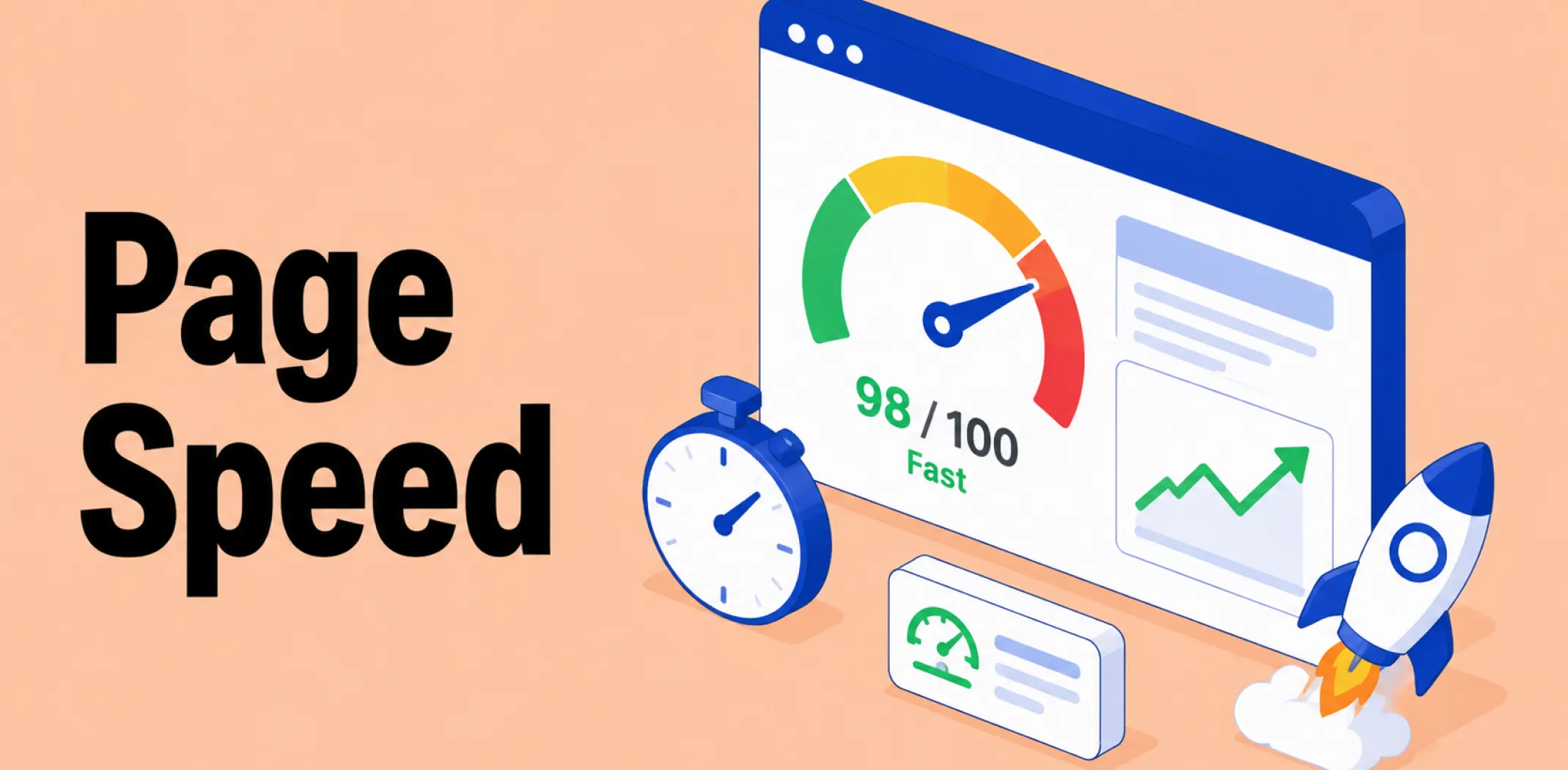
Page speed refers to how quickly a webpage’s content loads and becomes usable for a visitor, measured from the moment a page begins loading to the point its main content is visible and ready for interaction.
Google formalized page speed measurement into a standard set of metrics called Core Web Vitals, introduced in 2021 and now part of how the company evaluates page experience for search rankings.
The metrics are measured against real visitor data collected through the Chrome browser, evaluated at the 75th percentile, meaning at least three-quarters of a page’s actual visits must meet the “good” threshold for the page to be classified as performing well overall.
Following Google’s March 2026 core update, this evaluation shifted from a per-page basis to a more holistic, site-wide model, meaning a large share of slow pages across a site can now suppress rankings even for individual pages that perform well on their own.
Core Web Vitals consist of three specific measurements. Largest Contentful Paint (LCP) measures loading performance, tracking how long it takes for the largest visible element, often a hero image or main heading, to appear on screen; a good LCP falls under 2.5 seconds.
Interaction to Next Paint (INP) measures responsiveness, tracking how quickly the page reacts to a visitor’s click, tap, or keypress; a good INP falls under 200 milliseconds, and replaced an earlier metric called First Input Delay in 2024.
Cumulative Layout Shift (CLS) measures visual stability, tracking how much page content shifts unexpectedly while loading; a good CLS score stays under 0.1. Slow server response times, unoptimized images, and heavy third-party scripts are among the most common causes of poor scores across all three metrics.
Example
An online store notices its product pages are loading slowly, with a hero image taking over four seconds to appear. After compressing product images, deferring non-essential marketing scripts, and switching to a faster hosting plan, the store’s Largest Contentful Paint improves to under two seconds. Within weeks, the store sees a measurable drop in bounce rate and an increase in completed checkouts, since visitors are no longer abandoning the page before it finishes loading.
Key characteristics
- Directly tied to conversion rate: Research consistently links faster load times to higher conversion rates, with even fractional improvements in loading speed associated with measurable increases in sales for ecommerce sites.
- A recognized search ranking factor: Google has confirmed that page experience, including Core Web Vitals, factors into search rankings, generally acting as a tiebreaker between pages of otherwise similar content quality.
- Measured using real visitor data: Core Web Vitals scores come from actual Chrome browser sessions rather than simulated lab tests alone, meaning real-world conditions like slower devices and mobile networks are reflected in the results.
- Mobile performance carries extra weight: Since the majority of web traffic and searches now happen on mobile devices, mobile page speed scores generally have a stronger influence on rankings than desktop scores.
- Common fixes target specific bottlenecks: Image compression and faster hosting typically improve LCP, reducing JavaScript execution time improves INP, and reserving space for images and ads in advance improves CLS.
Related terms
- Hosting – the server-based service whose response time directly affects a page’s loading performance and Core Web Vitals scores.
- Mobile-responsive – a design approach closely related to page speed, since a responsive layout that loads efficiently on mobile devices supports stronger Core Web Vitals scores.
- CMS – the content management system underlying a site, where plugins and configuration choices can significantly affect overall page speed.
- Ecommerce – the broader category of online commercial activity in which page speed has a particularly strong, measurable link to conversion rates and revenue.
- Page builder – a tool that can add significant code weight to a page if used heavily, sometimes affecting page speed if not optimized carefully.
Frequently asked questions
What are Core Web Vitals?
Core Web Vitals are three specific metrics Google uses to measure page experience: Largest Contentful Paint (loading performance), Interaction to Next Paint (responsiveness), and Cumulative Layout Shift (visual stability). Each has a defined “good” threshold, and Google evaluates them using real visitor data rather than simulated tests alone.
Does page speed actually affect search rankings?
Yes, Google has confirmed that page experience, including Core Web Vitals, is one of many factors in its ranking algorithm. It generally functions as a tiebreaker between pages of comparable content quality rather than a factor capable of overcoming weak content or poor SEO on its own.
How much does page speed affect ecommerce conversions?
Studies have found that even fractional improvements in load time can meaningfully increase conversion rates, while slower load times are associated with higher bounce rates and abandoned checkouts. For high-traffic ecommerce sites, these effects can translate into a substantial difference in monthly revenue.
What is the most common cause of poor page speed?
Unoptimised images and slow server response times are among the most frequent causes of poor Largest Contentful Paint scores, while heavy third-party scripts, such as chat widgets and analytics tools, are a common cause of slow responsiveness and unexpected layout shifts.
AliDropship: An all-in-one platform for starting dropshipping in 2026
AliDropship is a dropshipping platform that covers store creation, product imports, order automation, and marketing within a single system. It is designed for users with no prior ecommerce experience, though it also supports scaling for more established stores.
🛍️ Free turnkey store
New users receive a free pre-built store – set up, designed, and stocked with products. The store includes a ready-to-use product catalogue and a standard storefront design. It also comes with hosting, a domain, SSL, and payment systems already set up and included.
📦 Products
The platform provides access to a product catalogue covering both trending and niche items, with one-click import to your store. The catalogue is updated regularly to reflect current market availability. Products can be browsed, filtered, and added without leaving the platform.
🚚 Shipping & fulfillment
AliDropship provides access to a vast catalogue of products from global suppliers and handles order fulfillment automatically once a purchase is made. Customers receive tracking information directly, and orders are processed without manual intervention from the store owner.
📣 Marketing & promotion tools
The platform includes built-in marketing tools covering email campaigns, discount management, SEO settings, and social media integration. These are available within the dashboard and do not require third-party subscriptions for basic use.
👌 Ease of use
AliDropship requires no coding knowledge. The dashboard contains all the necessary tools for managing your store, products, and orders in one place. Additional features and products can be added as the store grows without rebuilding the existing setup.
What are Core Web Vitals?
Does page speed actually affect search rankings?
How much does page speed affect ecommerce conversions?
What is the most common cause of poor page speed?
Are you ready to become an owner
of a profitable online business?
Free Dropshipping Guide